

⚽ Used Cars & World Cup 2026 | Prices, Demand & Tips
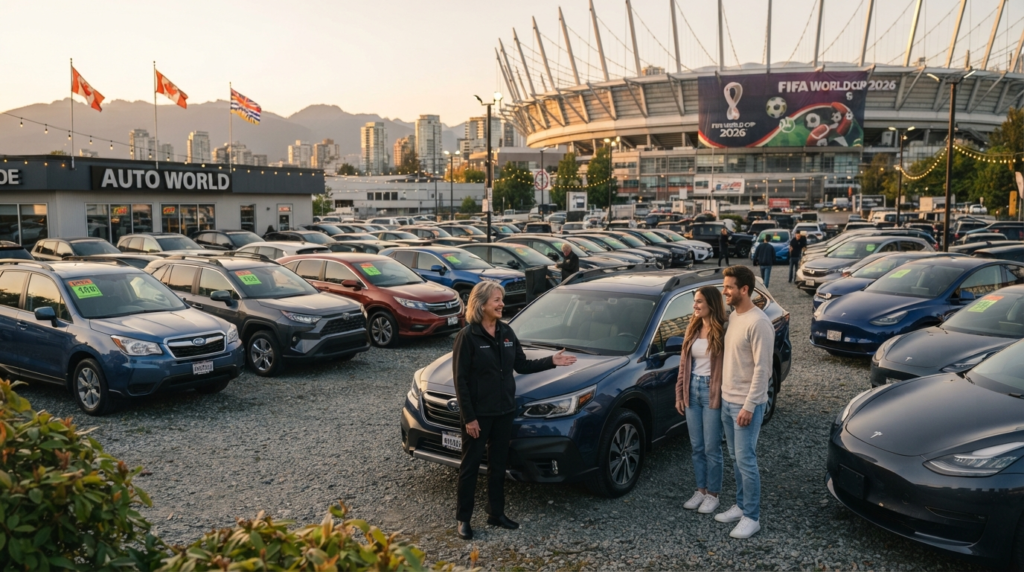
Why Everyone Will Be Looking for Wheels in 2026
Here’s a number that stuck with me. Nearly 1.5 million ticketed spectators. Just in the Northeast corridor alone . Now multiply that across all 16 host cities. That’s millions of people moving around.
I’ve been watching what happens to cities during mega-events. The 2015 Pan Am Games in Toronto? Public transit was a nightmare. People were desperate for wheels – any wheels. They bought cheap cars just to get around.
The 2026 World Cup will be bigger. Way bigger. Three host countries. 104 matches . And the infrastructure? Some stadiums were built for NFL tailgating, not mass transit . That means a whole lot of people will be looking for used cars.
So what happens to prices? Which cars will everyone want? And if you’re buying or selling, what’s your move?
Why Used Car Demand Is About to Spike in Host Cities
Let’s be real. Most North American stadiums weren’t designed around public transit. They’re surrounded by parking lots . That’s fine for 20,000 people on a Sunday afternoon. It’s not fine for 80,000 people arriving and leaving within a narrow window.
I’ve talked to transit planners who are genuinely stressed about this. One of them told me: “The sidewalks are going to be overwhelmed first. Crosswalks are going to be bottlenecks. And the ride-share pickup zones? Total chaos.”
Here’s the thing. When transit is packed and Ubers are surge-priced to $200, people make a different decision. They buy a car. Or they rent one. Or they borrow one.
We’re already seeing the pattern. I looked at used car transaction data from April 2026. 254,881 transactions. Down 7.2% year-over-year . That sounds like demand is cooling, right?
Not exactly. The market is quietly shifting. Buyers are putting down less money – average down payment dropped from $3,600 in 2024 to $2,000 in 2026 . They’re financing more. They’re holding onto cars longer . And they’re getting nervous about what comes next.
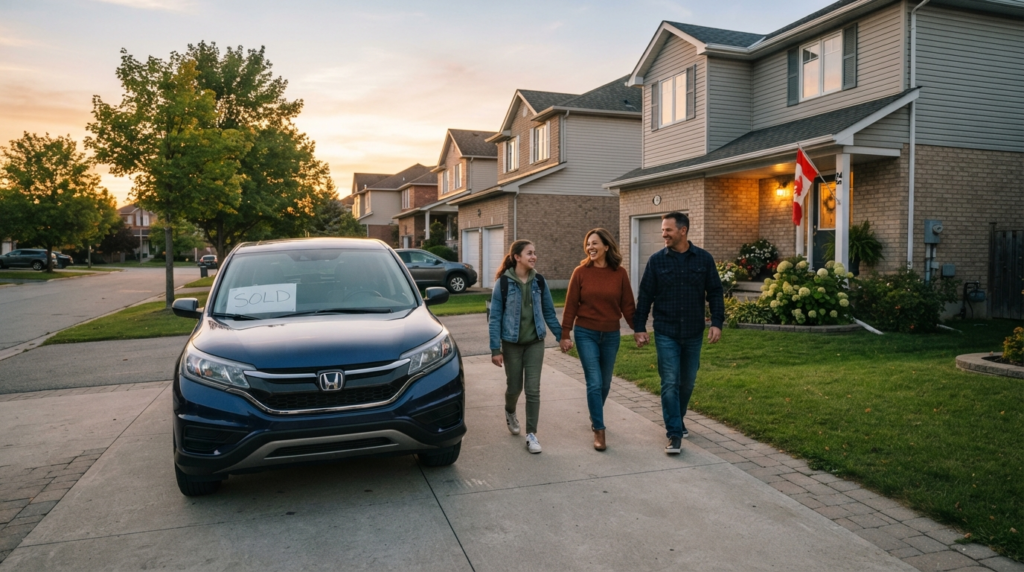
Which Used Cars Will Be in Highest Demand?
Not every used car will sell equally. Here’s what I’m seeing based on market data and common sense.
SUVs – This is the obvious one. More space. More comfort. Great for families or groups traveling together. SUVs now account for a record 56% of all used listings . That’s not a coincidence. Buyers want them.
Electric Vehicles (EVs) – Interesting story here. Used EV prices actually went up 4.7% month-over-month in April 2026, hitting an average of $40,893 . Why? Gas prices are climbing (hit 178.8 cents per litre in April) . Supply is tight – EVs only make up about 4% of used listings . More Chinese EVs are coming to Canada, but not enough to flood the market .
Affordable Sedans – These are the value plays. The Honda Civic, Hyundai Elantra, Toyota Corolla – they’re still the most-searched used vehicles . They’re also dropping in price faster than SUVs. Good for budget-conscious buyers.
The Price Puzzle: Will Cars Get More Expensive?
This is the million-dollar question. And honestly? The answer is complicated.
Canadian Black Book’s 2026 outlook says used-vehicle depreciation will land around 14.5% this year, slightly improved from 2024 . Four-year retained values will average 54.7% – still higher than pre-pandemic .
What does that mean in plain English? Prices are coming down slowly, but they’re not crashing. Supply for 0-8 year old vehicles is expected to drop 2.6% in 2026 . So inventory is tight and likely to stay that way.
“The market has fundamentally changed,” the report says. Translation: don’t expect to see $10,000 used cars like you did in 2019. Those days are gone.
Now layer on the World Cup effect. Increased demand in host cities could push prices up. But the broader market trend is actually toward stabilization .
Financing Tips: How to Buy Without Getting Burned
Look, I’ve bought used cars before. Some were great. Some were money pits. Here’s what I’ve learned.
Get pre-approved before you shop. Know your rate and your budget. That way you’re negotiating on the car price, not the monthly payment.
Watch out for negative equity. 18% of car owners are now underwater on their loans. Average negative equity has climbed from $5,000 in 2024 to $8,000 . That’s brutal.
Avoid 8-year loans. I’m seeing more lenders offer 96-month terms . Yes, your monthly payment is lower. But you’re paying way more interest. And you’ll be underwater on that loan for years.
Don’t overpay for extras. Dealers love to add rustproofing, extended warranties, and “etching” fees. Most of it is pure profit for them. You can say no.
Expert Insight: Should You Buy Now or Wait?
Here’s my honest take.
The used car market is moving in two directions at once. Overall trends show prices normalizing and supply slowly improving . But the World Cup could create localized demand spikes in host cities like Vancouver, Toronto, and Montreal.
If you’re selling? Late 2026 might be a sweet spot, just before or during the tournament. If you’re buying? Honestly, don’t wait too long. The tariff uncertainties and supply constraints aren’t going away .
I’ve seen this pattern before. The people who win in these markets are the ones who plan ahead – not the ones who show up three days before and panic.
Where to Find Used Car Listings in Host Cities
- Digilife360 – Browse vehicle listings in host cities. Sellers can post their cars now. Buyers can start planning.
- AutoTrader – Canada’s largest marketplace. The Q3 2025 Price Index data shows used car prices averaging $36,911 nationally .
- CARFAX Canada – Check vehicle history reports. Worth every penny. And used vehicle transactions are showing a modest rebound .
- Facebook Marketplace & Kijiji – Private sales often cheaper, but buyer beware. Get a mechanic’s inspection.
FAQ
Probably in host cities, yes. But nationally, the market is stabilizing. In April 2026, average used car prices fell 3.8% year-over-year. Supply remains tight, which keeps prices from dropping too fast .
SUVs are the most popular choice, now accounting for 56% of all listings . But if you’re on a budget, sedans are more affordable and still reliable.
Dealers offer protection and often financing. Private sellers are cheaper but riskier. Get a CARFAX report either way.
Get pre-approved through a bank or credit union. Average down payments have dropped to $2,000 in 2026, and buyers are financing about $31,000 on average.
Conclusion
So here’s where I land.
The 2026 World Cup is going to put a lot of pressure on Canadian host cities. Public transit will be stretched. Parking will be a nightmare. And used car demand will rise.If you’re a seller, wait. If you’re a buyer, don’t wait too long.
The market is stabilizing, but supply is still tight. Prices aren’t crashing. And the World Cup effect is real.
Do your homework. Check CARFAX. Avoid negative equity. And don’t panic.
