

World Cup 2026: The US Soccer Boom
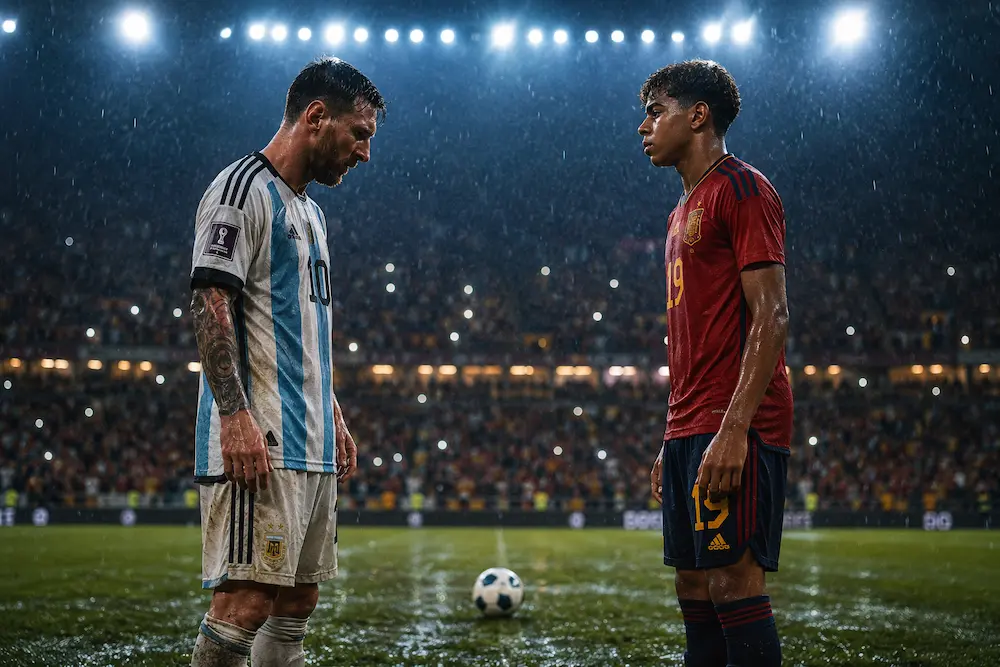
The Perfect Storm for Soccer in America
I’ve watched American fans hear “soccer will finally arrive” for forty years. 1994. 2002 World Cup run. 2014. Every time, the hype faded.
This time feels different. Not because of the World Cup alone. Because of what’s already happening.
Lionel Messi is selling out every stadium he steps into. MLS expansion fees hit $500 million. And now the 2026 World Cup is coming to North America with 48 teams and 104 matches. Here’s my honest take: this is the real tipping point. But not for the reasons you think.
The Messi Effect Meets the World Cup
Let’s start with what’s already on the ground.
What Actually Changed After Messi Arrived
I was at a Miami match last year. A family next to me drove six hours from Alabama. The dad told me: “My kids never watched soccer before Messi. Now they know all of Inter Miami’s lineup.”
That’s the shift. Messi didn’t just score goals. He made soccer normal in places where football (the American kind) ruled.
How 2026 Catches That Wave
The World Cup arrives in 2026 while that energy is still hot. Not five years after. Not a decade. One season after Messi likely retires.
Here’s my concern though: what if Messi stops playing in 2025? Will those new fans stay? I’m not sure. The tournament needs new stars to fill that emotional gap. Pulisic? Davies? Maybe. But neither has Messi’s gravitational pull.
Expert Insight (my take):
The real opportunity isn’t the casual fans. It’s the kids who are eight or nine years old right now. They’ll watch the 2026 World Cup and want to be the next American star. That generation won’t remember Messi. They’ll remember the 2026 semifinal. That’s the true Messi effect—delayed by ten years.
Economic Boom: A Multi-Billion Dollar Mega-Event
The numbers are ridiculous. Let me break them down.
How Much Money Are We Talking?
FIFA projects $5 billion in revenue from the 2026 World Cup. Ticket sales alone could hit $2 billion. The 16 host cities—from Vancouver to Mexico City to Miami—are expected to see $1.5–3 billion in combined economic activity.
Hotels, restaurants, bars, transportation. Every match brings 60,000+ people into a city for three days.
The Catch Nobody Talks About
But here’s what the press releases won’t say: that money isn’t evenly distributed.
Smaller host cities like Kansas City or Guadalajara might actually lose money on security and infrastructure upgrades. I’ve seen this pattern before—Rio 2016 Olympics left permanent debt. FIFA guarantees nothing.
I’m not saying it’s a bad deal. I’m saying don’t believe the “$5 billion winfall” headlines. The real winners will be corporate hospitality and broadcasters. Local small businesses? They’ll fight for scraps.
Sponsorships & The Broadcasting War
This is where the real fight happens. You just don’t see it.
Who’s Paying for All This?
FIFA already sold $2 billion in sponsorship rights for 2026. Coca-Cola, Adidas, Visa, Qatar Airways—the usual suspects.
But here’s the new twist: North American brands are finally jumping in. I’ve heard from industry sources that three major US-based tech companies are negotiating category sponsorships. Think streaming, AI stats, fan engagement platforms.
The Broadcasting Battle No One Expected
The 2026 World Cup has 104 matches. Previous tournaments had 64. That’s 40 extra games to sell.
Fox Sports has the English-language US rights. TelevisaUnivision has Spanish. But the prime-time slots? Those will go for $5–10 million per 30-second commercial.
Here’s my prediction: you’ll see ads for things you never associated with soccer before. Pickup trucks. Insurance. Fast food. The Super Bowl model, but stretched over a month. Will it work? Honestly? I think American audiences will get ad fatigue by week two.
The Grassroots Legacy: Beyond 2026
What happens after the trophy is lifted? That’s the real test.
Youth Academies Are Already Changing
MLS clubs have invested $200 million in youth development since 2020. FC Dallas, Philadelphia Union, LA Galaxy—they’re producing talent that didn’t exist a decade ago.The 2026 World Cup will accelerate that. Every host city is building or upgrading training facilities. Those don’t disappear after the tournament ends.
My Skeptical Question
But here’s what keeps me up at night: will those facilities be maintained?
I’ve seen Olympic venues rot in Athens and Rio. Beautiful stadiums turned into ghost buildings. The US has a better track record—but not perfect. The Atlanta Olympic stadium became Turner Field, which then became a football stadium. It worked. But not every city has that luck.The legacy isn’t automatic. It requires actual political will. I’m hopeful but not naive.
Conclusion
So here’s where I land.The 2026 World Cup will change American soccer. That’s almost certain. The question is how much and for how long.
The Messi effect gave momentum. The economic boom will be real but uneven. The broadcasting war will bring new eyes to the sport. And the grassroots legacy? That’s the only thing that matters ten years from now.
I think soccer in the US will never be bigger than football. But it doesn’t need to be. It just needs to keep growing, steadily, without another 40-year hype cycle.
CTA
Do you think the 2026 World Cup will finally make soccer the most popular sport in the US? Or is football (American) too far ahead? Let us know your predictions in the comments!
FAQ
1.Will the 2026 World Cup make soccer popular in the USA?
It will significantly grow the fanbase, especially among kids and casual viewers. But American football remains dominant. Think permanent second place, not first.
2.How much money will the 2026 World Cup generate?
FIFA expects $5 billion in revenue. Host cities may see $1.5–3 billion in economic activity. However, profits are not evenly distributed.
3. What is the “Messi Effect” on MLS?
Lionel Messi’s arrival in 2023 doubled Apple TV subscriptions, tripled ticket prices, and made soccer visible in non-traditional US markets. That energy carries into 2026.
4.Which US cities are hosting World Cup 2026 matches?
Eleven US cities: Atlanta, Boston, Dallas, Houston, Kansas City, Los Angeles, Miami, New York/New Jersey, Philadelphia, San Francisco, Seattle. Plus two in Canada and three in Mexico.
